
Start with what you already have, then calm the visual noise
A calm home look is usually less about buying the “right” items and more about editing what is already on your shelves, tables, and walls. I learned this the hard way the first time I tried to redecorate on a tight budget. I kept adding, thinking the space would feel finished. Instead, it looked crowded and stressed me out every time I walked in.
When you want a home decor refresh, begin with three quick questions:
- What do you see first when you enter the room?
- What looks busy up close?
- What feels heavy or cluttered, even if it is technically organised?
Then make small, reversible moves. Take down one wall display that competes with another. Group items by purpose instead of just by what looks pretty together. If your coffee table has a stack of mail, a random coaster pile, and two trays, it will still feel noisy, even if every object is neutral.
A budget-friendly calm often comes from creating breathing room. For most people, that means fewer objects on each surface and more intentional spacing. A useful rule of thumb is to keep flat surfaces to one anchor item and one smaller supporting piece, such as a lamp or a plant. Everything else can be stored away.
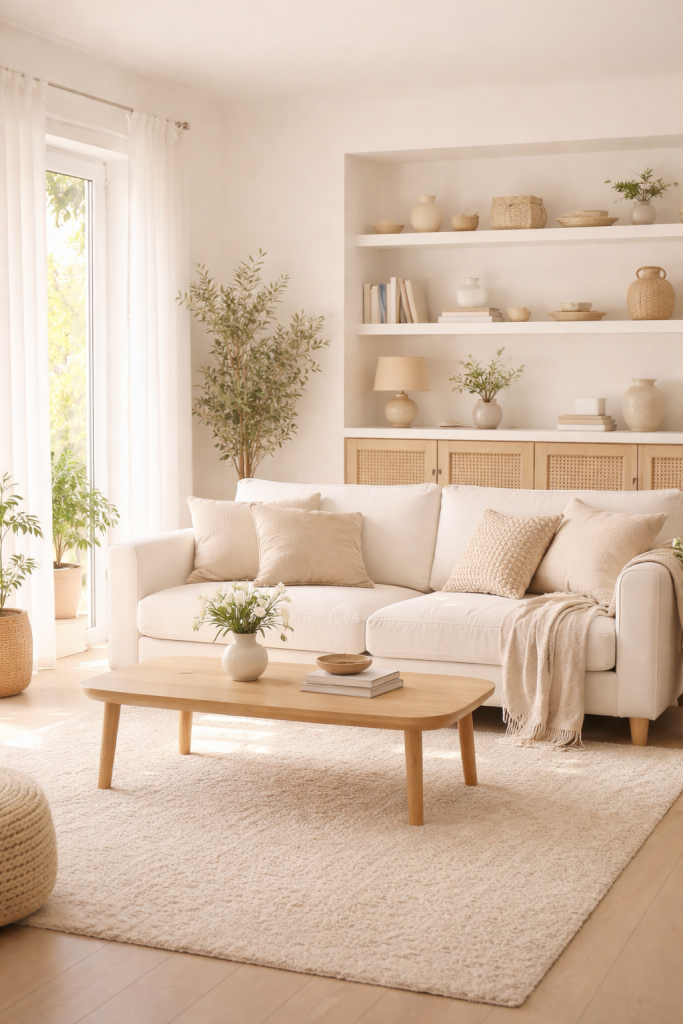
What to buy first: low-cost pieces that do the heavy lifting
There are a handful of home decor purchases that tend to change a room quickly without draining your wallet. These are the items that affect texture, light, and the overall sense of order.
One of the most useful strategies is to improve the background before the details. You can have lovely accents, but if your base is off, the room will still feel unsettled.
Here is what to prioritise when you want a calm, cohesive look on a budget:
-
Curtains you actually like
Even simple curtains in a soft neutral, warm white, or light grey can make a room feel more finished. If new curtains are expensive, use affordable panels from a discount shop with curtain rings to elevate the look. The biggest difference often comes from hang height. Place them closer to the ceiling and let them skim the floor if possible, even if they bunch slightly. -
Coordinated bedding and throw blankets
Swap just the top layers. A crisp duvet cover, a simple sheet set, and one cosy throw can make a bedroom feel like a retreat. On a budget, focus on calming tones and one texture contrast, such as linen blend with a chunky knit. You do not need five decorative pillows. You need a few pieces that support the mood. -
A forgiving rug that softens the room
Rugs visually unify a space and soften hard edges. If you are shopping, look for a pattern that hides minor wear, such as a subtle weave or tonal design. A rug that feels good underfoot matters more than whether it is currently fashionable. -
Lighting with warm, dimmable bulbs
This is the quiet upgrade people rarely think about until they notice the difference. Warm bulbs create a softer mood, and dimmable lighting can completely change how a room feels. If your budget is limited, start with lamps before replacing ceiling fittings. -
Storage that disappears
Clear bins are not always calming. Better options are lidded boxes, closed baskets, or fabric storage cubes. The aim is to reduce visual chatter. Calm often comes from not having every belonging on display.
Buying these first keeps your spending focused where it matters. It also helps you avoid a common mistake, which is buying decorative extras before the room has the basic elements that make everything else look better.
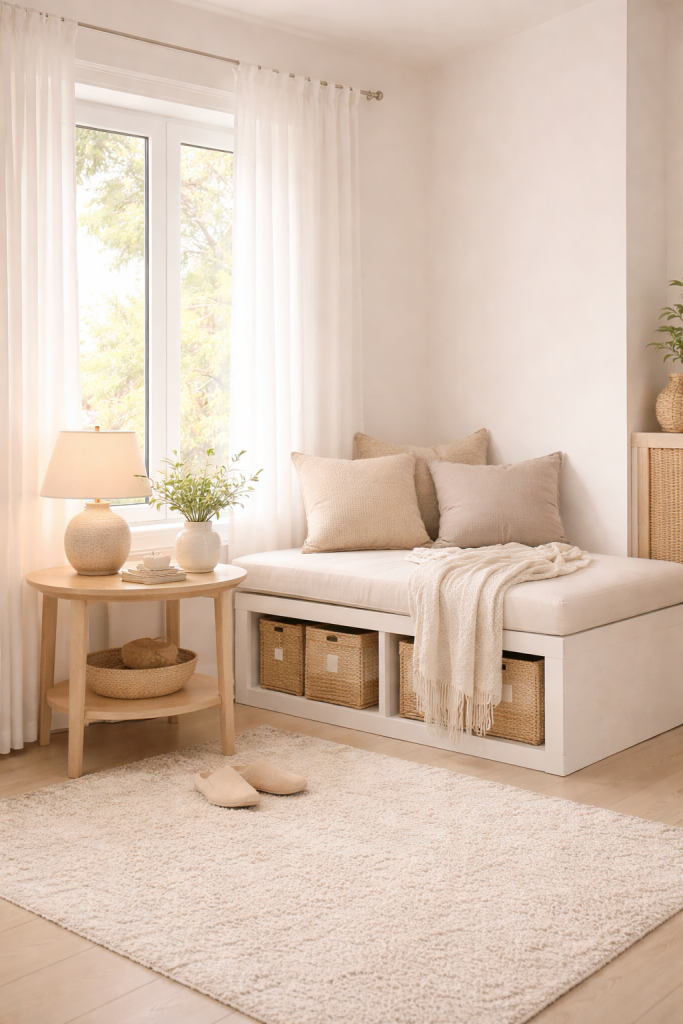
What to skip or delay, even if it looks tempting
To protect your home decor budget, it helps to know what tends to waste money. Some items are not bad in themselves, but they are often the wrong first step when your goal is a calmer space.
Here are the things worth skipping or delaying until after the basics are in place:
-
Matching everything at once, especially artwork and ornaments
It often creates a “set” look that feels stiff. Calm homes usually feel personal, not manufactured. -
Statement decor before you fix the surfaces around it
If your shelves are cluttered, a bold tray or dramatic candle holder will only draw more attention to the clutter. -
Ultra-trendy pieces with no clear home
If you cannot immediately say where the item will live long-term, it is probably too soon to buy it. Calm comes from decisions you can maintain. -
Expensive wall paint before you understand your colour preferences
Paint can absolutely change the mood of a room, but it also locks you in. Try samples first, watch how they shift in daylight and lamplight, and only then decide. -
Major furniture swaps you may regret
A new sofa or dining set is a big emotional purchase. If you are unsure about the layout, start with rugs, lighting, and soft furnishings. Move slowly, measure carefully, and live with the current arrangement for a week before making bigger decisions.
Skipping these early purchases helps you avoid the familiar cycle of buying, realising it does not work, returning it, and starting over. That cycle costs time, money, and more patience than most people have to spare.
I once bought a set of decorative wall shelves because they looked sleek online. In my living room, they made the space feel taller but also more exposed. I ended up removing them and replacing them with a simpler curtain panel and one larger framed print. The calmer look came from reducing visual interruptions, not adding more of them.
How to create calm with colour, texture, and spacing
Calm home decor usually follows a few simple patterns: limited colour families, consistent textures, and fewer competing focal points.
Colour: choose one quiet base, then add warmth
A calming palette often starts with warm white, soft beige, greige, or muted shades of blue or sage. You do not need to commit to one perfect shade forever, but your larger pieces should sit in the same temperature range. Cold greys mixed with warm woods can feel slightly off unless they are balanced carefully with textiles.
If you are unsure where to begin, start with one neutral you already own. Then bring in a second colour through a throw, curtain, or cushion. Keep a third colour minimal, perhaps in a candle, plant pot, or small frame.
Texture: aim for consistency, not perfect matching
Texture creates depth without clutter. Think in layers: a woven rug, cotton or linen curtains, a knit throw, a matte ceramic lamp base. When the textures feel cohesive, the room will read as calm even if there are several objects in it.
Try not to mix too many glossy finishes. Too much shine reflects light in different directions and can make a room feel busier than it is. Matte surfaces often work better for a softer, more settled mood.
Spacing: give your eyes somewhere to rest
Spacing is one of the most overlooked parts of a calm room. If your coffee table is crowded, it will never feel restful. If your bookshelves are packed edge to edge, the room starts to feel demanding.
Try arranging objects in small groups and leaving visible gaps between them. A single framed photo with one small plant can be enough. Every surface benefits from a visual pause.
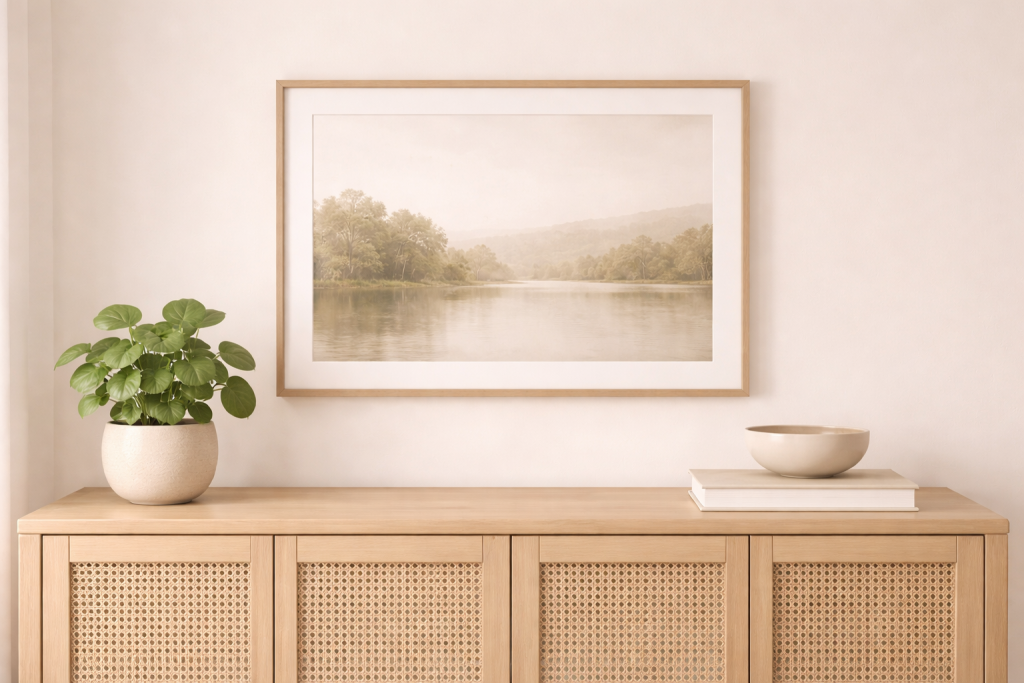
A budget-friendly plan for the next 48 hours
If you want to start straight away, resist the urge to rush to the shops. You will usually get better results by adjusting your space first so that the right purchases become obvious.
Over the next two days, focus on clarity and placement rather than perfection. Move items back to where they make sense. Decide what you truly want to keep visible. Once you know what stays, you can buy pieces that support the room instead of competing with it.
Small actions can make a noticeable difference very quickly:
- Clear one surface completely and wipe it down. Put back only the items you use or truly want to see every day.
- Adjust one lighting source so it feels softer in the evening.
- Test a warmer bulb in one lamp and notice how the room changes.
- Measure for one key item, such as curtains or a rug, before you shop.
A calm home does not come from buying more. It comes from making better decisions about what stays visible, what supports your daily life, and what quietly improves the room. Start with the basics, give your space room to breathe, and let the finished look build slowly.