
Why “classic” can start to feel tired
There’s a particular kind of disappointment that happens when you walk into a room you once loved. The layout still makes sense, the furniture still fits your life, and the colors still look “fine.” Yet the space somehow reads older than it should.
In my experience, it’s rarely one dramatic mistake. It’s usually a handful of small choices that were popular at the time and are now subtly fighting the way light, proportion, and daily use work together. The good news is that you don’t need a full home reset. A few targeted Home Decor tweaks can bring the room forward fast, without making it feel like you’re chasing trends.
Mistake 1: Furniture that’s the right pieces, wrong proportions
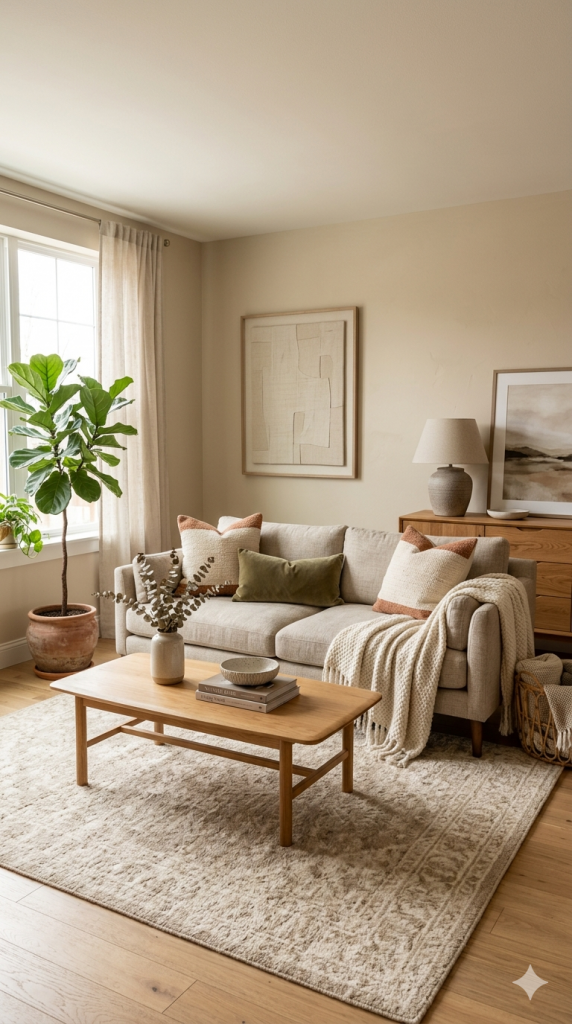
A room feels dated when the scale feels stuck in a different decade. Maybe the sofa is “classic,” but it’s too low and too narrow for the wall it sits against. Maybe the coffee table looks elegant, but it leaves no breathing room when you’re reaching for your mug.
One common pattern I’ve seen in older setups is oversized or undersized anchor pieces that don’t relate to the wall size or the sightlines. You get a space that looks “placed” rather than lived in.
Easy fixes that don’t require new furniture: – Add a rug that’s the correct size so the furniture visually groups together. – Layer a taller floor lamp or a slightly larger framed piece so the vertical scale catches up. – Swap out a few accessories for bulkier ones, like larger pillows or a thicker throw, to restore balance.
A simple rule of thumb that’s helped clients: if you can’t easily picture the room working without those pieces being “just a little off,” the proportions are probably the culprit. The correction can be as small as changing a cushion height or choosing a rug that extends under the front legs of the sofa and chairs.
The edge case to watch
If you have a smaller room and you’re worried about things feeling crowded, don’t “oversize everything.” Instead, focus on one anchor change, usually the rug and lighting height. You’re aiming for harmony, not mass.
Mistake 2: Curtains and window treatments that don’t frame the light
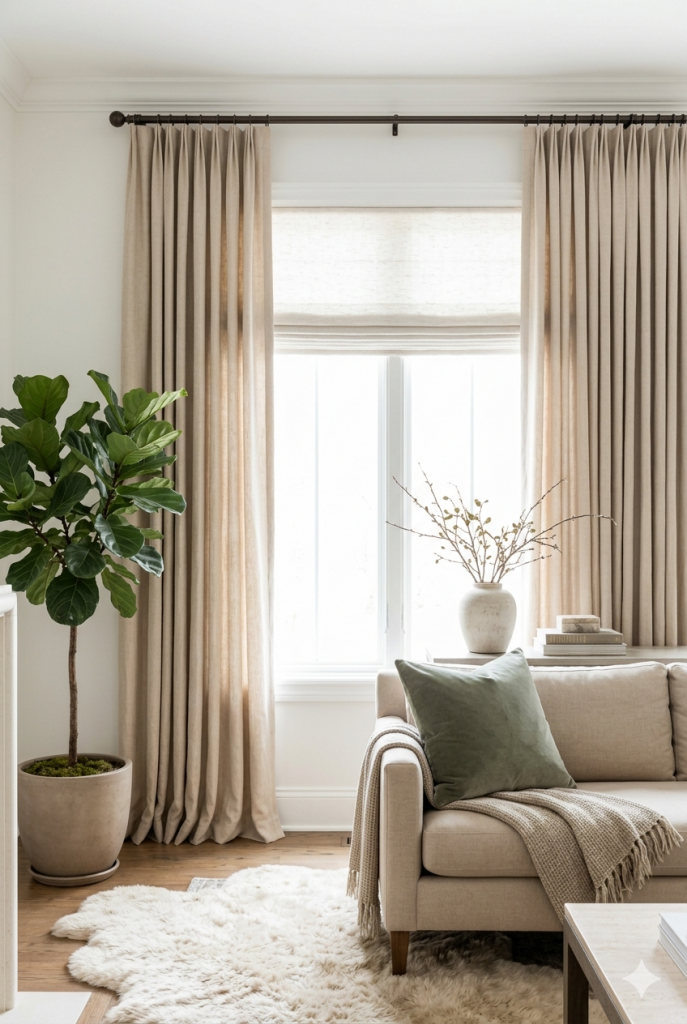
Window dressing is where “classic” can quietly turn into dated. If your curtains stop short, bunch at the wrong height, or look thin and flat, the room loses softness and dimension. Even with beautiful furnishings, the window becomes the weakest link.
I’ve lived through this personally. For years, I used curtains that technically covered the window, but they always looked like they belonged to the previous apartment. The moment I adjusted the rod height and switched to a more substantial fabric, the whole room looked intentional.
What typically makes rooms feel old: – Rods mounted too low, leaving awkward gaps above – Sheers that are too minimal, with no layering or weight – Curtains that don’t puddle slightly at the floor (when they’re meant to) – Patterns and colors that don’t relate to your other textures – Hardware that’s too small or too shiny for the room
Quick, high-impact adjustments
Start with the rod. Mounting it higher creates the illusion of taller windows and better ceiling height. Then choose a fabric that adds drape, even if you keep the same color family. If you want an easy win, add a simple lining or layer. You don’t have to go heavy or formal; you just need the window to “hold” the room rather than disappear into it.
If your window trim is very detailed, consider a rod color that blends with the trim instead of floating in contrast. That’s how you keep classic Home Decor from slipping into mismatched, dated energy.
Mistake 3: Lighting that’s all the same brightness, at the same level
Lighting is a surprisingly common reason a room feels older than it looks on paper. When every lamp gives the same intensity, and the light stays low, your space looks flat. It’s not cozy, and it’s not flattering, even if you choose appealing fixtures.
Classic rooms often rely on one overhead light plus a lamp or two, which means shadows gather in the corners and under furniture. The eye reads that as “mess” or “wear,” even when everything is clean.
Easy fixes you can do in an afternoon
Most rooms improve dramatically when you adjust three things: lamp placement, lamp height, and bulb warmth.
- Use a consistent warm bulb temperature, typically around the 2700K to 3000K range, so white walls don’t turn gray.
- Add a second light source with a different direction, like a floor lamp aimed upward or a table lamp near seating.
- Replace mismatched bulbs so brightness levels match across fixtures.
Trade-offs I’ve seen
If you have a very bright kitchen-style ceiling fixture you love, you don’t have to remove it. But dimmers help, and lamps help more. The goal is layered light, not just “more light.” Too many bright lights, without contrast, can make rooms feel like a showroom.
Also, avoid aiming every lamp straight at the room. Indirect light adds depth, but if you overdo it, the room can feel dim at night. Watch how it feels in the evening, not just during daylight hours.
Mistake 4: Wall art and mirrors that are too small or too far apart
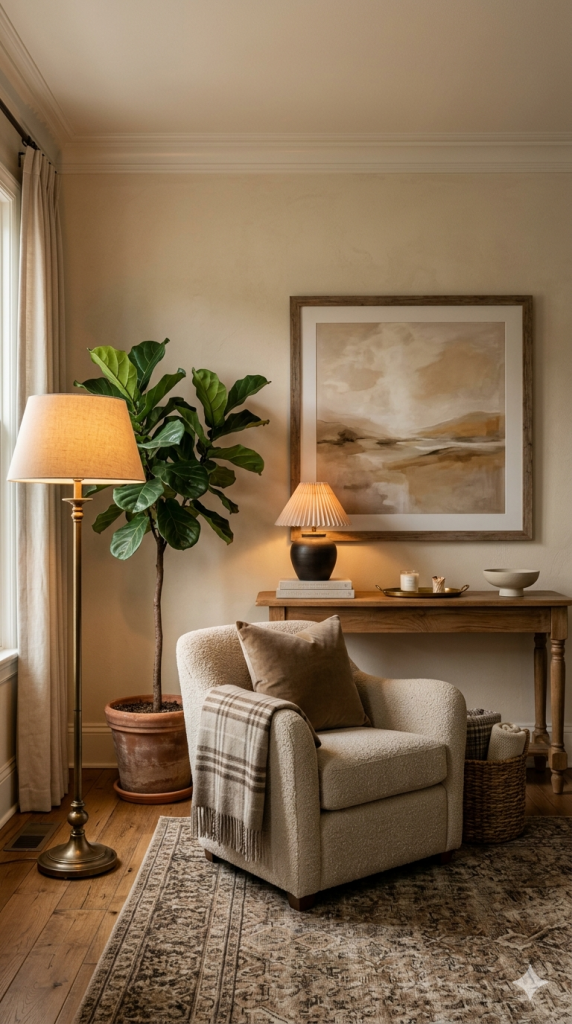
Wall decor is another place where classic Home Decor can quietly date itself. Small frames scattered across a wall often look like they were chosen at different times, even when they weren’t. And mirrors that sit too low or too narrow can make a room look less polished.
When wall art is the wrong scale, it competes with furniture instead of anchoring it. I’ve found that people then try to “balance” the wall by adding more decor, which creates clutter without solving the proportion issue.
A practical way to fix it without buying a whole new gallery
Choose one wall and commit to a better anchor first. You can do this with a single larger piece or a thoughtfully sized grouping.
Here are the adjustments that tend to make the biggest visual difference: 1. Hang art with the bottom edge roughly aligned around eye level, typically 57 to 60 inches from the floor. 2. Use larger pieces above sofas instead of multiple tiny frames. 3. Center the artwork over the furniture, not over the wall space. 4. Swap a narrow mirror for a wider one if your goal is a brighter, more grounded feel. 5. Match frame finish to a dominant metal in the room, like brushed brass with brass accents, not chrome with everything.
Where people get stuck
If you love the pieces you already own, you don’t have to start from scratch. The most cost-effective change is often spacing and scale. Repositioning art by even a few inches can make it feel like a new room, because it suddenly belongs to the furniture and the wall height.
Mistake 5: The rug, the paint, and the “right” color that still feels dated
Sometimes the color palette is classic in theory but off in execution. A room can feel dated when the undertones fight each other. For example, warm woods plus cool grays, or creamy off-whites next to crisp whites, can make everything look slightly tired.
Rugs often show this first. A rug that used to feel perfect can start looking muted after you notice the paint undertones more clearly. And if the rug pattern is busy but the rest of the room is flat, the space can feel older rather than grounded.
Easy fixes with real staying power
Start with small coordination changes that update the room without forcing a repaint.
- Bring home a few swatches and compare them next to existing textiles at different times of day.
- Add one or two warmer or more saturated textiles, like a throw blanket or pillow covers, to unify undertones.
- If repainting is on your list, choose a shade that matches how the room actually feels in the evening, not just under overhead light.
If you’re hesitant about paint, you can get a similar effect by refreshing Home Decor around the room. New curtains, a different rug, and updated throw pillows can rebalance the color temperature quickly. You’re essentially giving your eyes new reference points, and the room reads more current.
One last judgment call
If the room still feels dated after you fix scale, lighting, and window treatments, don’t panic. Look for what you can simplify. Dated rooms often have too many “competing classics” happening at once. Choose fewer, stronger textures and let them breathe. That’s usually where the modern, lived-in feel finally clicks.