A quieter way to start, especially if you feel overwhelmed
If your home clutter feels like it has opinions, you are not alone. I have helped friends and clients who wanted to declutter “sometime” for years, then one day they finally opened a closet door and felt dizzy. Not because the mess was tragic, but because it was heavy, visually loud, and emotionally loaded.
The goal here is not to purge your whole house in one weekend. It is to make small, steady progress without turning decluttering into a dramatic event. You can do it without getting rid of everything you love, without buying a bunch of gadgets, and without needing a perfect schedule.
The method below is simple: move room by room, use clear decision rules, and keep the process gentle. The result is calmer spaces and easier home decor choices because you are no longer decorating around clutter.
Set up your decision system before you touch anything
Before you start pulling drawers open, give yourself a structure. Otherwise, you end up improvising in the moment, and that is where people get stuck.
Here is a lightweight system that works well, even when you are tired:
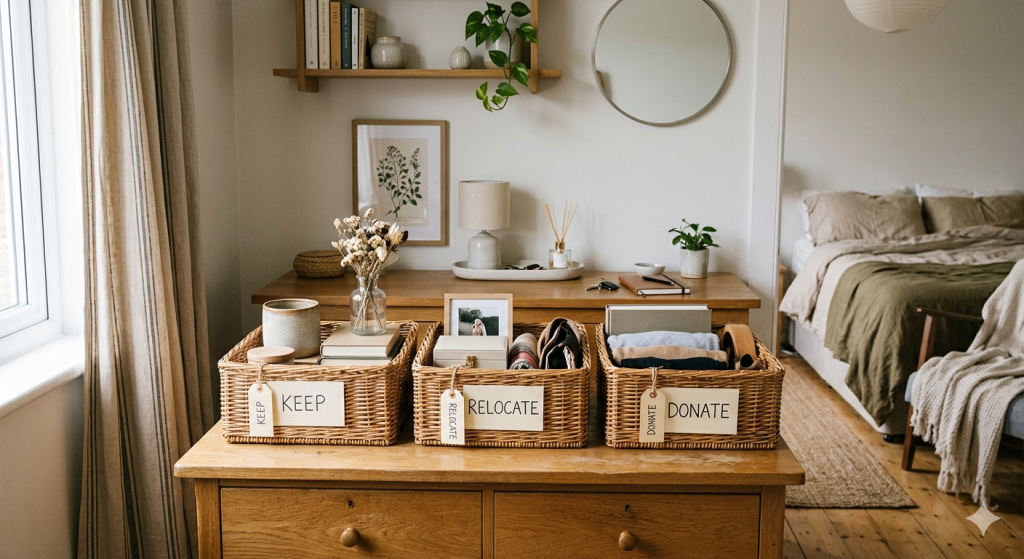
- Create three zones in your space: Keep, Relocate (temporary), and Donate/Trash (final).
- Use a small container for unknown items, not a whole box. If you use a big bin, you will underestimate how fast it fills.
- Pick a time limit for each session, such as 20 to 40 minutes. When the timer ends, stop, even if you are mid-thought.
- Choose one surface per room to begin with, such as a nightstand, dresser top, or closet shelf. Starting with a whole room can feel impossible.
One quick note from lived experience: the biggest decluttering battles usually happen when you try to decide everything at once. I once watched someone dump every drawer into a pile on the bed because they thought sorting meant chaos first. It looked productive for fifteen minutes, then it became exhausting. Sorting got much easier once we switched to a surface-first approach and a clear keep rule.
Your rules should be honest, not strict
Your decision rules do not need to be ruthless to work. In my household, I lean on three questions:
- Have I used this in the last year?
- Would I miss it if it disappeared for a month?
- Does it belong in this room, this category, or this season?
The last question matters more than people think. Sometimes items are not junk. They are simply misplaced. A cluttered room often has the same problem as a cluttered mind: things end up in the wrong place because life is busy.
Room-by-room: start with the easiest wins
When you declutter room by room, you avoid the all-or-nothing feeling. You also stop carrying decisions from one area to another. This is how you keep it low drama.
Here is a practical order that usually works well:
- Start in a room with limited storage, such as a bathroom vanity or entryway. Small spaces reveal problems quickly, and the improvement is visible fast.
- Move to a room with clear categories, such as a kitchen drawer or linen cupboard.
- Finish with the spaces that trigger emotions, such as the maybe-later wardrobe or the shelf of sentimental items.
That order can be adjusted, but the principle stays the same. If you begin with the hardest room, you may lose momentum before you build any traction.
Bathroom and entryway: clarity with minimal effort
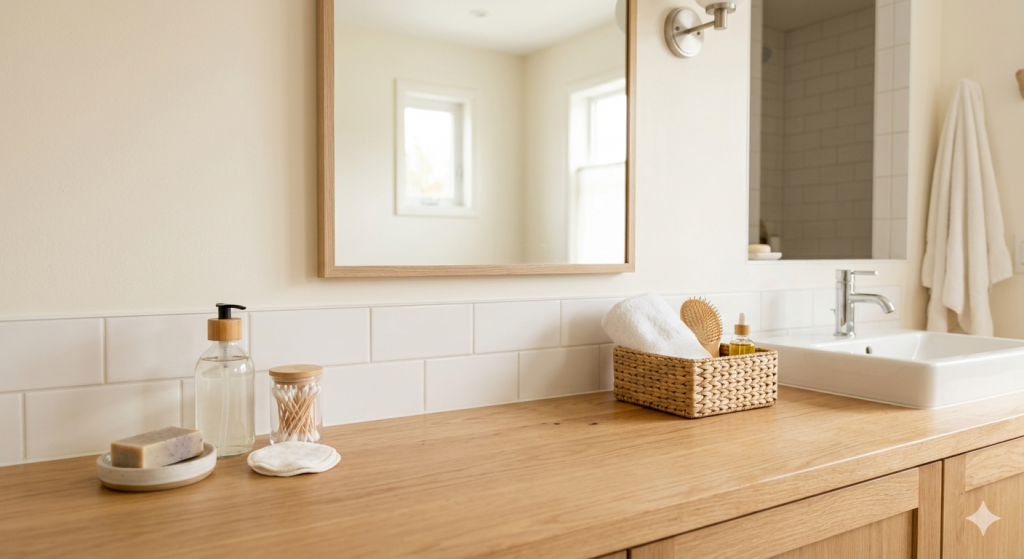
These areas are also important for home decor because they set the tone. If your bathroom counter is crowded, even pretty decor looks messy. If your entryway table is buried under post and keys, no vase or candle can fix the visual noise.
Try this approach:
- Clear one surface completely.
- Sort by category: daily essentials, extras you can store elsewhere, and items that do not belong there.
- Refill with fewer items, then stop. You are allowed to leave empty space. Empty space is not failure. It is breathing room.
A concrete example: I helped a neighbour who had six nearly identical bottles on her bathroom ledge. She kept reaching for the same two, and the others expired quietly at the back. Once we reduced it to what she actually used, she had enough space to display one simple soap pump and a small tray. The room looked intentional again, not like a storage unit.
Kitchen: declutter by zones, not by guilt
Kitchen decluttering can get personal fast. You might worry about getting rid of useful items. You might think you will cook more soon. This is where the method stays gentle.
Instead of sorting every cupboard at once, focus on one zone, such as:
- A drawer you use daily
- The utensil crock
- A single shelf near eye level
For anything you do not love or need, relocate it temporarily instead of deciding forever on the spot. Put it in the Relocate zone for two weeks. If you never reach for it, that usually tells you the truth.
Closets and drawers: handle the hard stuff with a pause
Closets are where “I might need this” likes to live. That phrase can feel comforting, but it also quietly expands your storage needs. If you want decluttering without drama, give your closet time to settle into a new reality.
The key is to stop treating closets like storage for future plans.
The one-in, one-out rule is optional, but a holding strategy helps
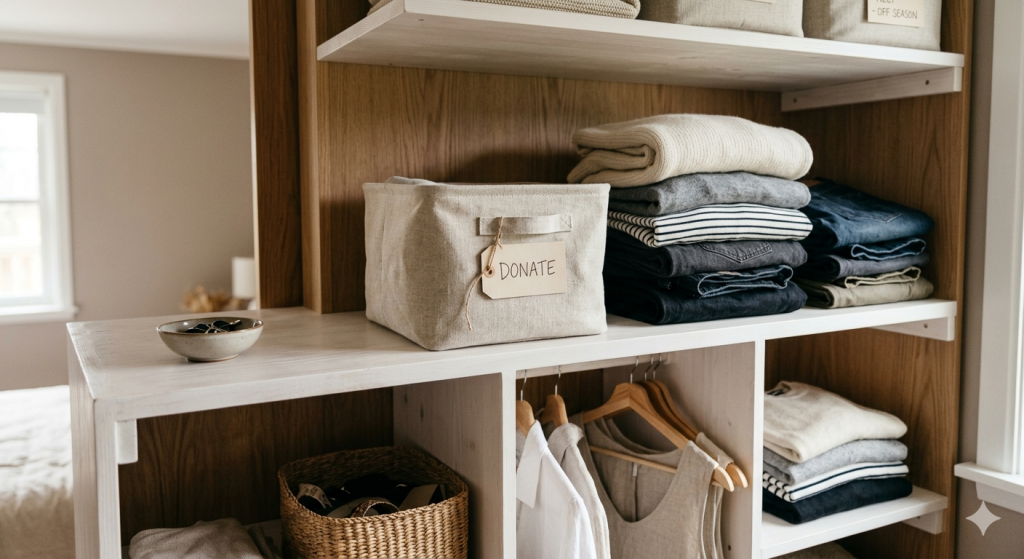
If your closet is full, you may not be ready for strict rules. That is fine. Try a softer approach instead: set aside a single area in the closet for pending decisions, such as one bin or one shelf labelled for items you are unsure about. Commit to reviewing it after a month.
When you revisit it, ask what you actually used. If the unsure items were never touched, you will usually feel more confident letting them go. If they were used, you have learned something useful about your routine.
Watch for common edge cases
Some items are hard to classify, not because you are failing, but because they genuinely need a little thought.
A few situations that often come up:
- Seasonal clothing that you genuinely rotate. Keep what fits the current season and store the rest neatly.
- Gifts you feel obligated to keep. You can keep one special item and donate the rest if they do not serve you.
- Sentimental items that you want to honour. Decide on a small display limit, such as one photo frame, one memory box, or one shelf.
- Tech gear you hold onto just in case. If you no longer know what it is for, it is probably safe to let it go.
- Paper piles that multiply. One stopping point, such as a single folder for active paperwork, works better than endless sorting.
This is also where judgement matters. You are allowed to keep a few things that bring comfort, even if they are not perfectly practical. The goal is to reduce excess and make space for the life you actually live.
Decor after decluttering: make it look intentional, not barren
Once you clear space, home decor stops fighting you. The after can still feel awkward, though. Some people worry the room will look empty or too simple. If that happens, shift your thinking from filling every corner to choosing a few deliberate pieces.
A gentle approach to filling space
Instead of buying new decor immediately, use what you already own. Then place items with purpose.
I often suggest a simple rhythm:
- Start with one functional base, such as a clean tray, basket, or stack of books aligned neatly.
- Add one decorative piece that you genuinely like seeing, such as a small framed photo or a textured candleholder.
- Stop while it still feels calm.
Remember, decluttering first gives you permission to see your style clearly. You no longer need to rely on covering clutter with decor.
One more lived detail: after I decluttered a living room shelf, I thought I needed to add more. I dusted and adjusted everything, then realised the best version was the one with fewer objects and clear negative space. A single plant and a neat stack of books looked warmer than a crowded display ever did.
Keep the momentum without starting over
The final challenge after decluttering is staying steady. You do not need intense follow-through, just small maintenance.
If you want a simple check-in, do one 10-minute reset at the end of each decluttering session. Put stray items back where they belong. Return anything in the Relocate zone to either Keep or Donate/Trash when the review point arrives. This keeps the process clean and stops clutter from rebuilding faster than you can deal with it.
Decluttering without drama is really about respecting your energy and your attention. Room by room, you make choices you can live with. And when your home looks and feels calmer, you naturally make better home decor decisions because the space is finally ready for them.